Shasta County History
From copper smelters and gold camps to the dam that doubled the population, and from termination law to the fires of 2018 — one county's story, told from the collection.
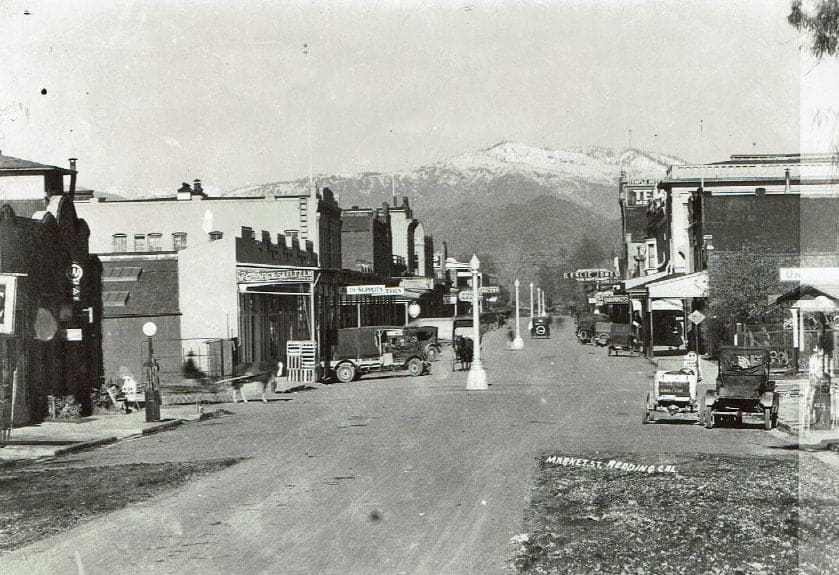
1900–1940
Fortunes first, scenery later
Settlers came to Shasta County to make money: gold, copper and iron, farming, lumber, and the building of dams and houses. Only once the county was economically established did people begin arriving for the other thing it had all along — the mountains, rivers and lakes on its doorstep.
Mining drove Redding's economy in the early twentieth century. Companies extracted and smelted large quantities of iron and copper. The industry made the town markedly wealthier, and it also produced clouds of pollution said to kill orchards in Happy Valley and Anderson. Its environmental consequences are still being studied. Mining declined in the 1920s, partly because farmers whose crops had been damaged took successful legal action. Population and economy faltered — but not for long. From the 1930s, the construction of Shasta Dam doubled the county's population and set off a new wave of growth.
The county before the dam
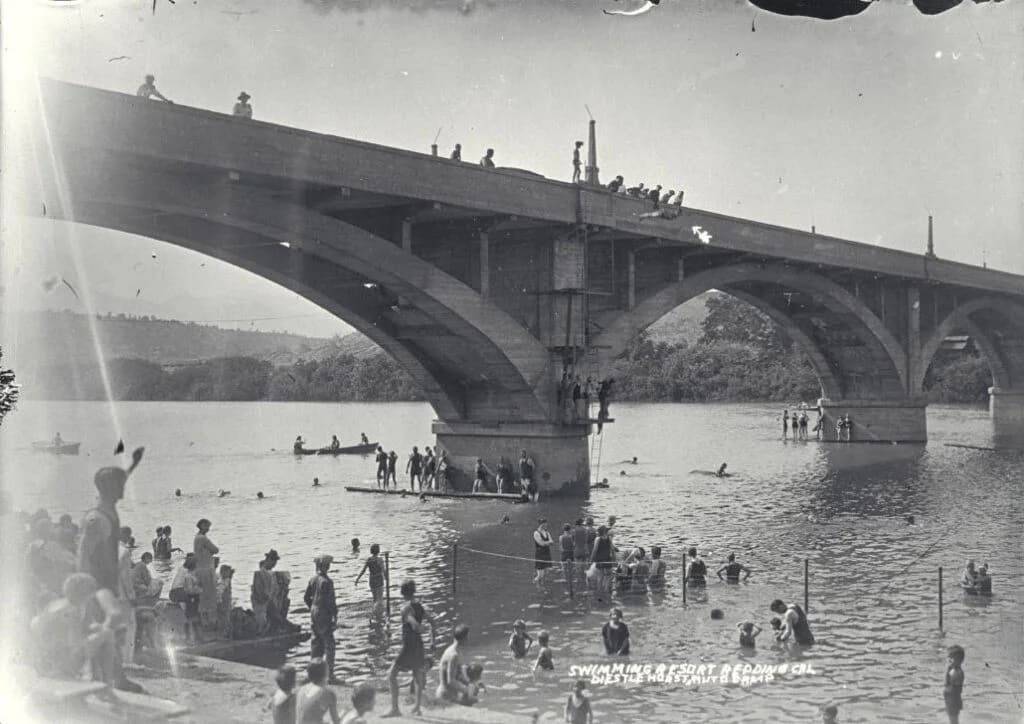
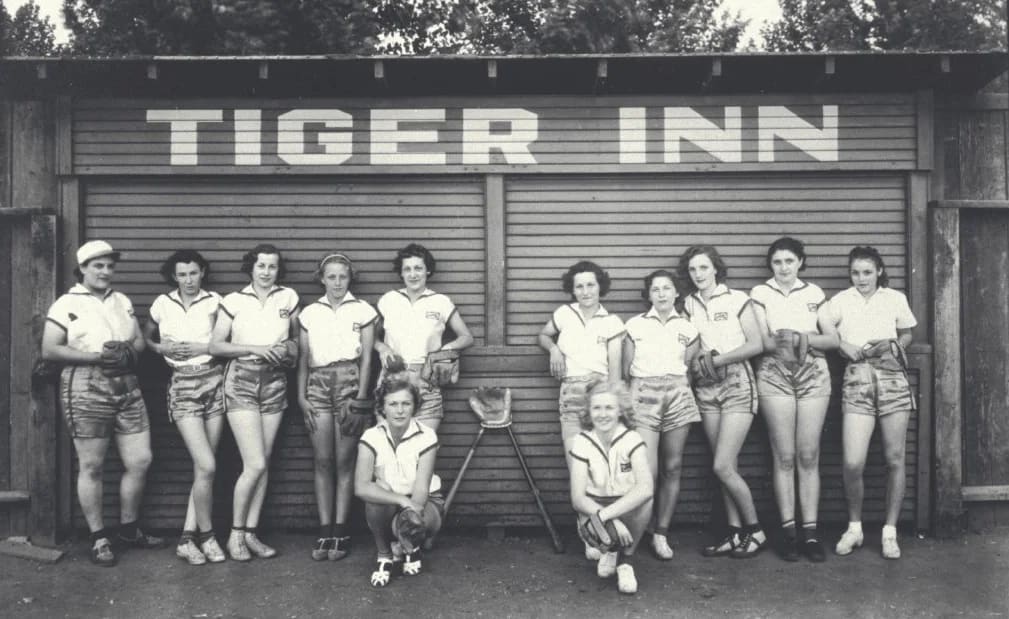
1914–1945
War, rationing and the home front
Selling bonds at the Cascade
A war bond premiere at the Cascade Theatre, 27 January 1944 — the home front as public spectacle, months before Shasta Dam was completed that September.

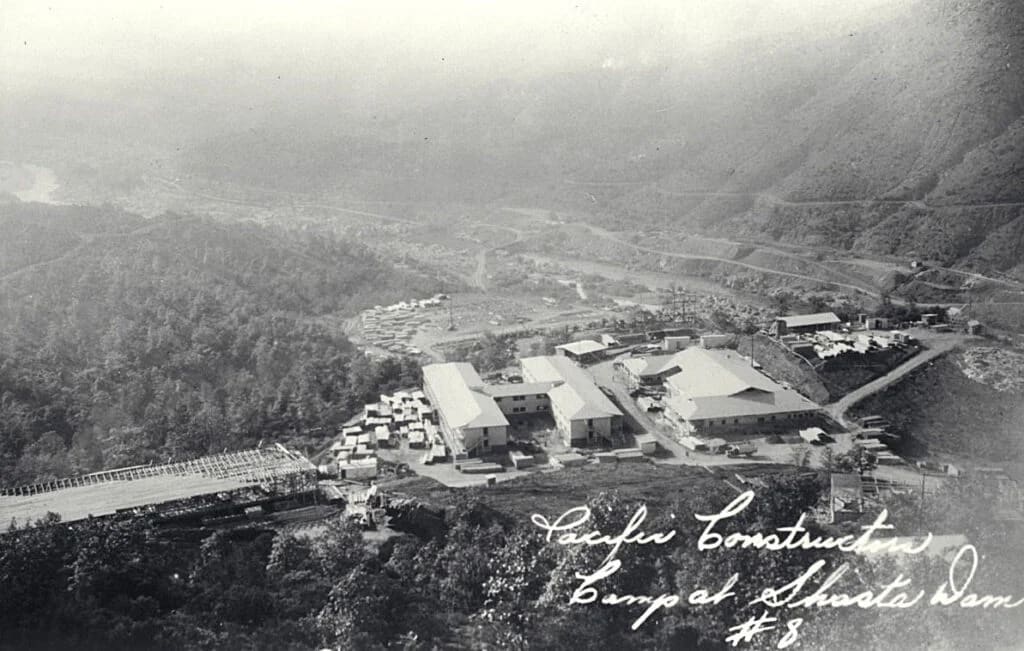
Completed in September 1944, Shasta Dam took six years to build, with its height being taller than the Washington Monument and its spillways three times the height of Niagara Falls.
1930s–1960s
How the dams remade the county
Flood control and hydroelectric power were the stated purposes. Population, tourism and recreation were the result.
-
Lobbying in Washington, early 1930s
Judge Francis C. Carr and John McColl pressed for funds, helping county leaders work Shasta Dam into the developing State Water Plan as the keystone of its Central Valley Project.
-
Shasta Dam completed, September 1944
Six years of construction, taller than the Washington Monument, built to end valley flooding and capture hydroelectric power.
-
Lumber and tourism carry the 1950s
Redding kept growing after construction ended, on the strength of the lumber industry and the visitors the new dam attracted.
-
Whiskeytown and Keswick, 1960s
The Trinity River Project brought another economic boost and new workers. Whiskeytown Dam created the holding basin from which Trinity River water is siphoned underground to the Sacramento as needed.
-
A National Recreation Area, 1962
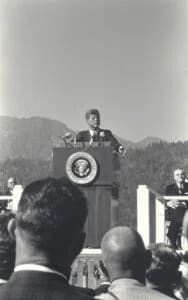
Shasta County voters chose to develop Whiskeytown as a National Recreation Area; President John F. Kennedy dedicated the dam on 14 October 1963, weeks before his assassination.
1970–2004
Boom, bust and the bridge
The mills close
With Shasta and Whiskeytown Lakes, and access to Mt. Shasta, Lassen Peak and the Trinity Alps, Redding became a tourist centre — helped by the railroad, air travel, Interstate 5 and better communications. In the 1970s the unincorporated community of Enterprise, east of the Sacramento River, was annexed into Redding.
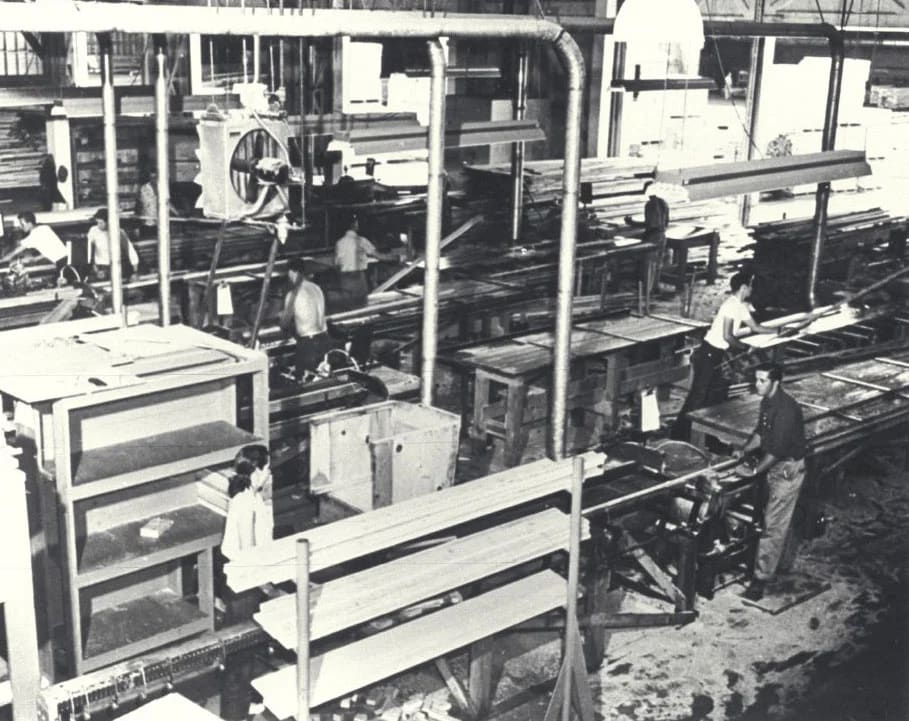
But from the 1970s the lumber industry declined. Mills closed, and through the prolonged recession of the 1980s the forest products industry began to collapse. A retail and housing boom in the late 1980s carried the area into the 1990s.
The Sundial Bridge
Designed by the Spanish architectural designer Santiago Calatrava, the Sundial Bridge opened on 4 July 2004. The $23.5 million pedestrian and cycling crossing of the Sacramento River links Turtle Bay Exploration Park to an arboretum and park and opens onto riverside hiking trails. It has become Redding's most recognisable landmark.
1922–1987
Native American history and termination law
Shasta County's history is not solely economic or recreational. The history of its Native American tribes is long, and often bloody — marked by armed conflict and exploitation that did not end with the Gold Rush.
The Bureau of Indian Affairs purchased the Redding Rancheria in 1922 to house Native Americans who had nowhere to live. Pit River, Wintu and Yana people lived there. Obliged to establish a domestic water system, a road and housing, the BIA built only a handful of substandard houses and met none of its other obligations.
Under the California Rancheria Act of 1958, Congress set out to extinguish the special status and rights of tribes. The Redding Rancheria was terminated on 6 July 1959 and its assets redistributed; the government no longer recognised the Rancheria, nor its residents as Native Americans. In the 1970s the Inter-Tribal Council of California formed task forces to challenge these terminations. In 1983 a California district court ruled that the BIA's failure to meet its obligations invalidated the Act, restoring the Redding Rancheria and seventeen other tribes to federal recognition. The restored tribe formally adopted its Constitution in 1987.
The history of the treatment of Indians in California is tragic. As recently as 1958, the California Rancheria Act expressed Congress' intent to eradicate the cultural identity of Indians.
Recent history
The fires of 2018
Shasta County has always been susceptible to fire, but nothing scarred the region — environmentally and psychologically — like the two fires of 2018.
| Fire | Began | Cause | Impact |
|---|---|---|---|
| Carr Fire | 23 July 2018 | Mechanical failure of a vehicle and trailer | Over a thousand homes and structures destroyed; eight people died |
| Camp Fire | 8 November 2018, Camp Creek Road | Faulty electric transmission line | Burned seventeen days across almost 240 square miles; Paradise and Concow all but destroyed |
Who tells this story
The history of Shasta County is complicated and important, and its best storytellers are the accounts left behind by our predecessors — and by the people who live here now.
Help keep this history alive
Join the Shasta Historical Society and support the work of collecting, preserving and telling the county's story.